
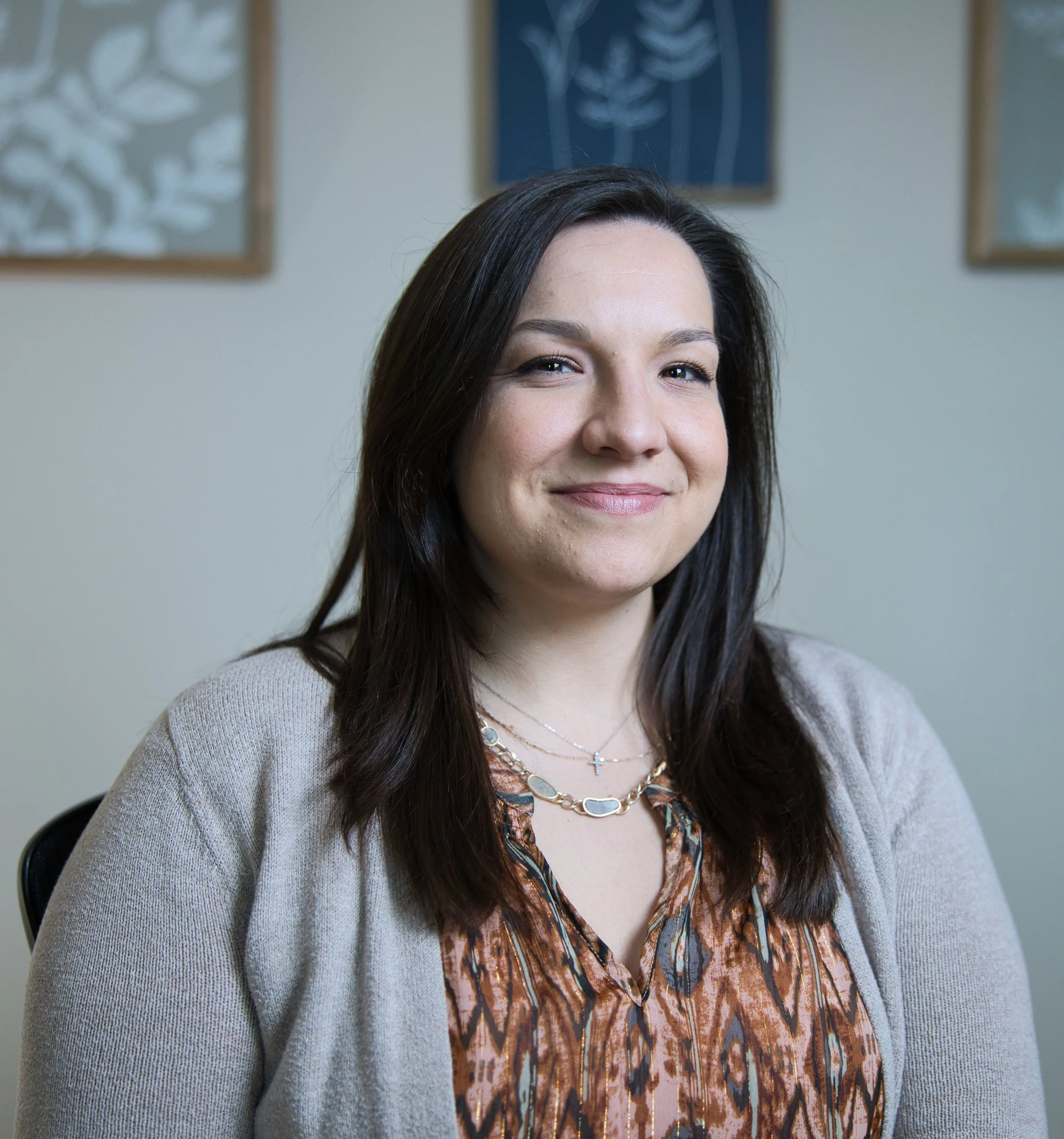
Katie McLaughlin, LPCC-S
Founder of Cedar Rose
Licensed Therapist Specialized in Anxiety Treatment
Licensed Professional Clinical Counselor + Counselor Supervisor
License # E.2102440 (Ohio, USA) - Verify my license
NPI #: 1194243246
Education
Bachelor of Science, Psychology, University of Arizona
Master of Arts, Clinical Mental Health Counseling, Xavier University
Certifications
Certified Integrative Mental Health Practitioner (CIMHP)
Bio
I've been practicing clinically since 2018 and have specialized in anxiety treatment throughout much of my clinical career. I hold a Bachelor’s degree in Psychology from the University of Arizona and a Master’s in Clinical Mental Health Counseling from Xavier University.
My clinical background includes churches, schools, community mental health, and a collaborative group practice where I began to specialize in anxiety treatment.
Today, my work is rooted in a mind-body approach — integrating evidence-based therapies like Acceptance and Commitment Therapy, Cognitive Behavioral Therapy, Exposure and Response Prevention and Mindfulness to help clients experience lasting, meaningful change.
About Katie
Clinical Approach
I became increasingly drawn to the treatment of anxiety because I saw how deeply it can affect a person's life—not only through worry, but through overthinking, perfectionism, avoidance, self-doubt, relationship difficulties, and the constant feeling that something needs to be figured out or controlled.
Over the years, I've found that some of the clients I connect with most naturally are thoughtful, driven women who are highly self-aware. They often understand themselves well and may have already spent considerable time trying to understand why they feel the way they do. Yet insight alone hasn't necessarily helped them step out of the cycles that keep anxiety going.
This is one of the reasons Acceptance and Commitment Therapy (ACT) has become such an important part of my clinical work. ACT offers a different way of understanding anxiety. Rather than teaching you to eliminate difficult thoughts or emotions, we work on changing your relationship with them and developing greater psychological flexibility.
I don't believe that every anxious thought needs to be solved, challenged, or replaced with a more positive one. Sometimes the work is learning to notice a thought without automatically believing it, analyzing it, or responding to what anxiety is asking you to do.
For clients experiencing OCD, I incorporate Exposure and Response Prevention (ERP), the evidence-based treatment specifically designed for OCD. Within an ACT framework, ERP provides opportunities to practice tolerating uncertainty, responding differently to intrusive thoughts, and stepping out of compulsive patterns.
My approach is collaborative and individualized. I want you to understand not only what we're doing in therapy, but why we're doing it. We'll combine clinical insight with practical application so that the work we do together can extend beyond the therapy room and into your everyday life.
I also believe that effective therapy should make room for the whole person. Your relationships, environment, physical experience, values, and life circumstances all influence how you experience anxiety. A whole-person perspective doesn't replace evidence-based treatment—it helps us understand how that treatment fits into your life.
Ultimately, I don't want therapy to become another place where you feel pressure to perform or get everything right.
My hope is that therapy becomes a place where you can slow down, understand what's happening, practice responding differently, and gradually create more room for the life you actually want to live.
I don’t view anxiety as something that’s broken—or something that needs to be fought or eliminated.
Instead, we approach it with curiosity and understanding.
Anxiety is a natural response from your mind and body. It’s designed to protect you, even if it doesn’t always feel helpful in the moment. When we begin to understand how your thoughts, emotions, and nervous system are working together, everything starts to make a little more sense—and change becomes more possible.
In our work together, we use a blend of evidence-based approaches, including Acceptance and Commitment Therapy (ACT), mindfulness, and Cognitive Behavioral Therapy (CBT).
Rather than working against your thoughts and emotions, we focus on changing your relationship to them.
You’ll learn how to:
• Notice your thoughts without getting pulled into them
• Respond to anxiety in a way that feels more grounded and intentional
• Understand how your nervous system reacts to stress—and how to support it
• Shift patterns that are keeping you stuck, with both insight and practical tools
This work isn’t about forcing yourself to feel differently or “fixing” every anxious thought.
It’s about learning how to work with your mind and body as they were designed—so you can feel more steady, more flexible, and more in control of how you respond.
When we take this approach, the relief you experience isn’t just temporary.
It’s lasting—because it’s rooted in a deeper understanding of yourself and a more supportive way of moving through the world.
As Seen On Media & Publications
Overcoming Anxiety with a Holistic Approach - Health in Motion Podcast by Holistically RestoredOn
How To Listen Effectively To Succeed Personally And Professionally - An Interview With Doug Noll
How to Help Someone With Anxiety (According to 30+ Experts) - UpJourney
Self-Care & Mental Wellness: Katie McLaughlin of Cedar Rose Counseling & Wellness On The Top Five Selfcare Practices That Improve Mental Wellness - An Interview With Maria Angelova
The Truth About Anxiety with Therapist Katie Mclaughlin - The Arise Podcast
Peer Endorsements
“Katie is a warm, attuned, and deeply skilled clinician. Her compassion and clinical insight create a safe, transformative space for healing and growth. I respect her integrity and would confidently recommend her to any client seeking meaningful change.“ ~ Jennifer Bennett Utech MA, LPCC, NCC
“Katie is a warm, knowledgeable therapist equipped to work with a variety of clients to help reach their goals. Katie creates a safe space to help her clients feel heard through evidenced based approaches. I highly recommend her for mental health care!“ ~ Rachel Dierker MA, LCP